
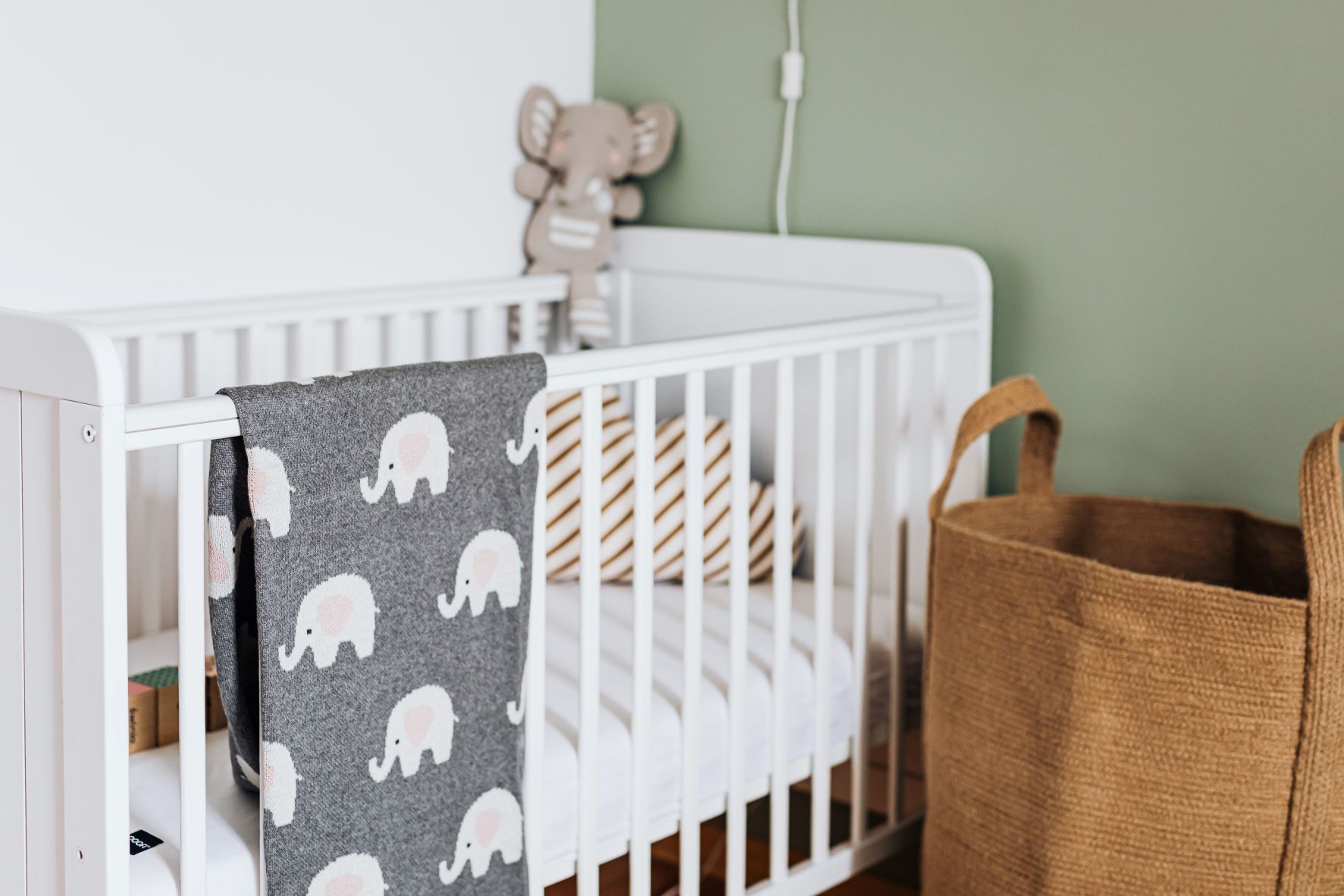
The beauty of nurseries! I love this kind of place, you may have so many ideas and you hope for this to be your kids future favorite place so it needs to be exactly right. Let’s dig into what it takes to create a nursery room!
Functional distribution
First of all, and most important is to have a functional distribution. For this, you have to understand what you are going to be using in this place. Nurseries generally are for babies and up to 2 years old; later people tend to transform it into something the child would like or into a space a bit more mature. It is crucial to establish if the baby is going to be sleeping in the parents bedroom or not. Experts recommend and by experts I mean other parents and pediatricians, they recommend that the baby sleeps in the same room as his parents in his own crib for a few months since he or she has been accompanied most of his early life in mommy’s belly. If you’re doing this, please don’t transform your own room into the nursery, since the baby won’t stay baby forever, and believe me, you’ll want your own space again sooner than later.
Being said that, a nursery is composed of 4 main stations since there are 4 main activities for the baby: Sleep, Change, Feed and Play. In each station there are specific items you need to consider and some others you can add on.
Sleeping stations. Main item: the Crib.
Think of it as the place where your little bunny will be spending more time, so the crib needs to be located in the most perfect spot. This means a place where the sunlight does not hit directly (you don’t want to overheat your child), a spot that has enough ventilation (babies have trouble regulating their temperature so it’s easy to be too cold or too hot) and a spot with easy access to it (don’t overlap furniture with it. Babies move a lot!) Some people use baby moses baskets, other ones any small sized crib to handle the baby better. You can consider them as one of the sleeping station items. Also You can accompany the crib with a mosquito net and a nightstand for different gadgets (pacifiers, night lamp, some blankets, etc).
Changing stations. Main item: Changing table.
Best recommendations for this one is: not too close to a possible open window (it can get too cold and end up with a fussy baby when changing) and locate it near a place full of light (you´ll need to see clearly when working in this station) along with this item comes a few more: trash can (of course), hamper, gadgets table (for diapers, ointments, clothes), diaper bag, cloth furniture or closets.
Feeding stations. Main item: Rocking chair.
I’m not sure if you’re the kind of parent that uses this or is going to use this but believe me, it helps a lot. So if you’re considering putting one I’ll locate it near the crib since a lot of babies tend to fall asleep after feeding, or just to calm the baby when fussines attacks. Of course you can nurse your baby anywhere, anytime, but with a good latching position comes a comfortable mamma and this chair along with a boppy does the trick. You can replace the rocking chair with a normal chair or sofa. With this item comes a few more: a nightstand (to put mommy’s water, phone, night lamp, bottles, etc), foot chair (who doesn’t want to be more comfortable?) maybe a fan or a heater, you decide.
Playing stations. Main item: Playing mat.
I know many people think that the child is too young to play or to have toys. In reality, at two months old (sometimes sooner) the baby can enjoy a few sounding toys, and from day one they can start tummy time! So don’t be afraid of laying a mat, carpet, bouncer, or baby gym with a few toys on the floor. After all, they have an awake window and as days go by, they want to stay awake more. This can help you too, so you can establish a routine, and the baby won’t have to be in your arms all the time. This station is “optional” in the nursery but a “Must” in the house, so locate it wherever you feel more comfortable with, this may be inside a living room, TV room, or even a gaming room.
We can arrange all the furniture in a way that the room feels open and bigger. Since most of the furniture you need must be attached or close to a wall, it gives you the possibility to have a central open space to move around. Locate all of the furniture thinking in a production process. Baby sleeps, then wakes up and changes diapers, then feeds, then plays and then sleeps again. Everything depends on your personal taste and style, but this might serve you as a blueprint to start developing your own routine.
Extra tip: A wall clock has been my favorite. Nothing like ‘’trying’’ to be in control with your newborn than keeping track of everything according to schedule and time.
Define concept.
I think this is the only case where you are allowed to use a shape concept without sounding too childlike. As simple as defining the main shape (teddy bears, stars, clouds, dinosaurs, elephants, etc.) A concept can also be a sensation or a feeling, for example, you want your room to feel lovable and sweet (tends to have pastel colors, round shapes, fluffy and soft materials), or calmness (tends to have a more neutral colors, like gray, beige or light blue). People also use the baby’s gender to develop the whole idea. This idea will give you the clue to our next step:
Define a color palette.
Having a Concept defined is your cheat sheet to the next step. All the sensations you want to convey or your shape concept will determine the colors. Having a color palette will help organize your mind when going shopping and choosing one object over another. This also will help you to stay in line with whatever you want, instead of just adding things you liked randomly in a store. Try to keep it between 3 to 4 colors/textures tops. One color should be neutral, one light, one dark, and if you want, one accent color.
Illumination
A baby's bedroom doesn’t need a super illuminated room, quite the contrary. The more indirect light you have the better, this means installing wall lights or floor lights to illuminate the ceiling, avoiding using one single light bulb in the ceiling as many rooms typically have or those big office like lights that will generate too much heat and light.
Consider warm bulb lights instead of white or cold. Some people use colorful led strip lights to accent certain walls. The important thing here is to avoid too strong lightning, like a stadium. Most of the time you will only be using a night lamp.
Accessorize.
Wallpapers, curtains, some paintings or pictures will do the trick. The accessories are all that are placed without any specialized installation (besides the wallpapers) Here you can go on and shop in your favorite store everything that goes with your concept and color palette.
Before building it, you can experiment with all the materials with a moodboard and some referential images, just for you to get the whole idea in the same page and your mind will be more ready when shopping every single item. Unconsciously you’ll choose one crib over another just by its colors or shapes. Now you’re ready to prepare the most beautiful and sweet space for your child and be sure to enjoy every minute of it.
- Details
- Written by: Arch. Glenton
- Category: LATEST POSTS
- Hits: 1870

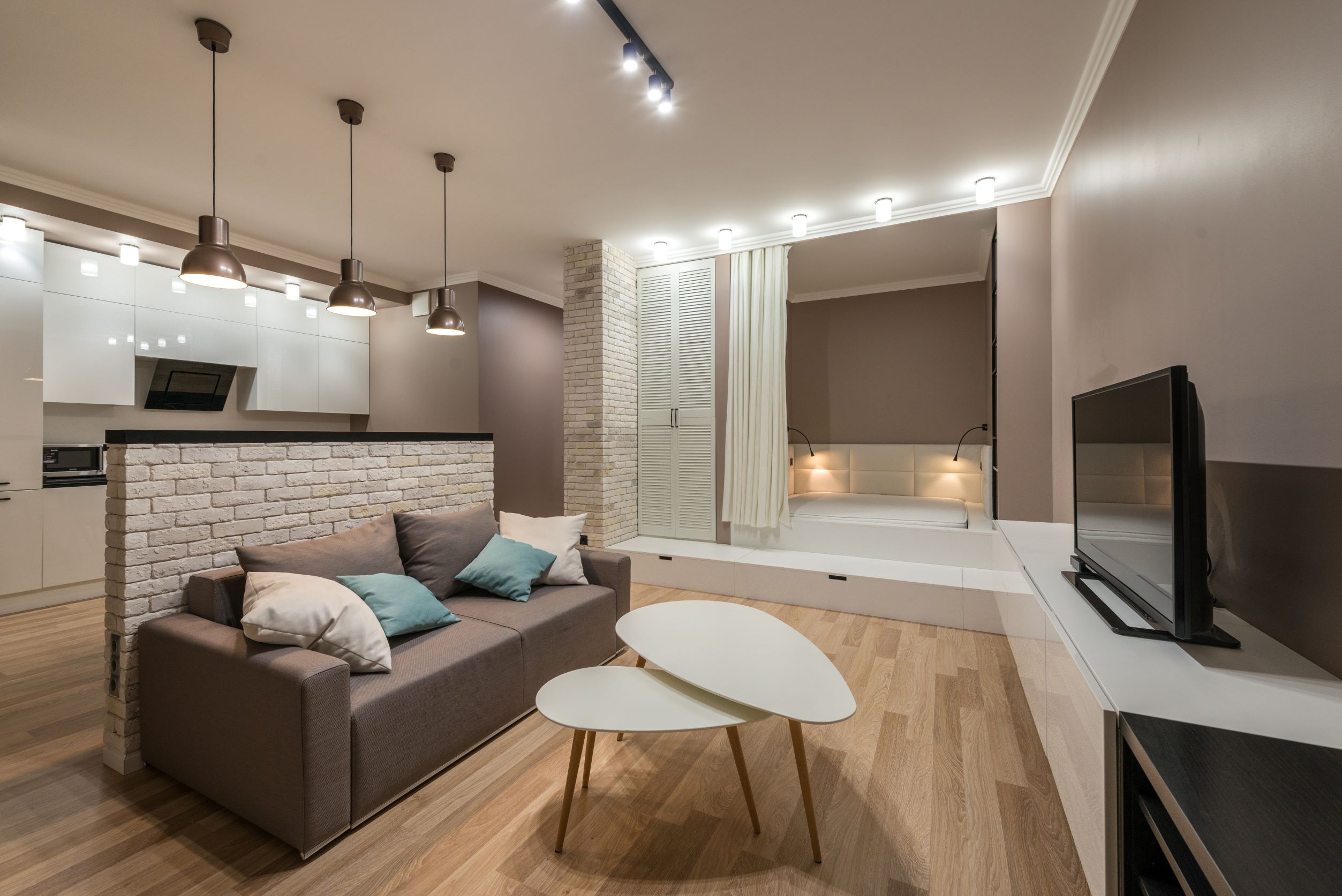
Having small spaces can be a headache, and a migraine if you want or need to be decorated. Since the population is getting bigger and the cities are running out of space, Small spaces are being the most effective ways in many buildings, but a problem many people face is that they don’t know how to make a great decoration on such a place, or don’t know if it is possible. First of all, of course it is possible, and second, as small as a space might be, there are different ways you can decorate it. Here are my best tips:
Avoid big furniture.
I would make an extra effort to avoid those big sofas or huge coffee tables. These tend to eat the whole place up and you will notice this, probably too late. Sometimes the spaces are not that small, but with this easy mistake, it can cost you a lot of the area wasted and the budget of course. Cheer yourself up! This means you actually have enough space, just have to look for the right furniture and accessories.
The beauty of light colors.
For small spaces, light colors for walls are essential. White, gray, or beige are the most used to make a place feel a lot bigger than what it really is. Along with these, a light color can make a place feel brighter and it also can help to make it feel bigger. This is because the light painted walls are reflective and tend to maximize the natural light effect, turning a place with the illusion that is bigger than what it really is.
Use mirrors.
If you’re going with this technique, I recommend using those big and elegant mirrors. It’s no use if you put a mini mirror out there in a corner, because it will have the opposite effect. Instead get those full length mirrors or those big rounded sun-like mirrors with a fancy frame just to get people's attention. This helps since it reflects 100% what it has in front of and simulates another room or a bigger space.
Develop colors in the furniture.
Having everything painted in white doesn’t mean the whole place is going to be that color. On the contrary, incorporating colors is a Must, as long as you do it correctly. The best way to do so is by including them with the furniture or anything you’ll place, for example rugs, some chairs, a few lamps or even the cushions. Here you can play not only with colors but patterns and textures. Place some paintings, or curtains with these beautiful patterns. It’s all about not saturating the place, just the right amount.
Keep the essentials.
The minimalist tendency has proven to make the place look a lot bigger since this style develops pure and elegant looks. Don’t think that you need to put a lot of things in a room to make it feel decorated. It doesn't work that way. Instead, put only the essentials and what you like most. Remove everything that you’re not using: too many magazines, some clothes on the floor. Avoid hanging too many frames or putting too many objects on tables. This will even make the place look smaller. This exercise may awaken your tidy personality.
Incorporate greens.
Nature has the power to soothe some emotions and decompress when feeling overwhelmed. Putting a few plants here and there will give the place the depth and freshness that it needs.
I recommend putting one or two considerable big plants just to get the attention or even a few plant pots in some corners. Some people prefer mini cactuses on the table, they’re cute, but not very inviting. Either way, find your place with nature and decide what’s best for you.
Rule of three - repetition.
The rule of three has proven to be an esthetic solution in interior design. Groups of three or more will maintain order, balance, sequence and variety. Here you can play with sizes, colors and shapes. As it is in Literature, the rule of three creates a more satisfying, entertaining and effective environment. Three hanging lamps, three photo frames, three pillows, and three colors. You can play with this rule with the heights of the objects too, in a continuous order or on the contrary, alternating heights. Lately, this last option has been the most used since it creates a spontaneous look.
An Extra tip: Maintain the place organized and clean. Nothing is better than entering a place with a nice smell and everything in order. I’m not saying this because I’m paranoid about cleaning, quite the opposite, as much as I hate cleaning all the time. I have to recognize that a place feels more decent and presentable, if there are no dirty clothes lying around or a dirty plate on the table with some supermarket bags. The less saturated, the better.
Of course this is a suggestion, since every space has its singularities and it’s up to you to decide which options are best suited for you. Remember, you are the designer here, you know this place and its potential to transform into what it's supposed to be. Hiring an interior designer can also get the job done, but if you’re not sure whether you need one here’s a video that can help you decide to decorate such a place.
- Details
- Written by: Arch. Glenton
- Category: LATEST POSTS
- Hits: 1773

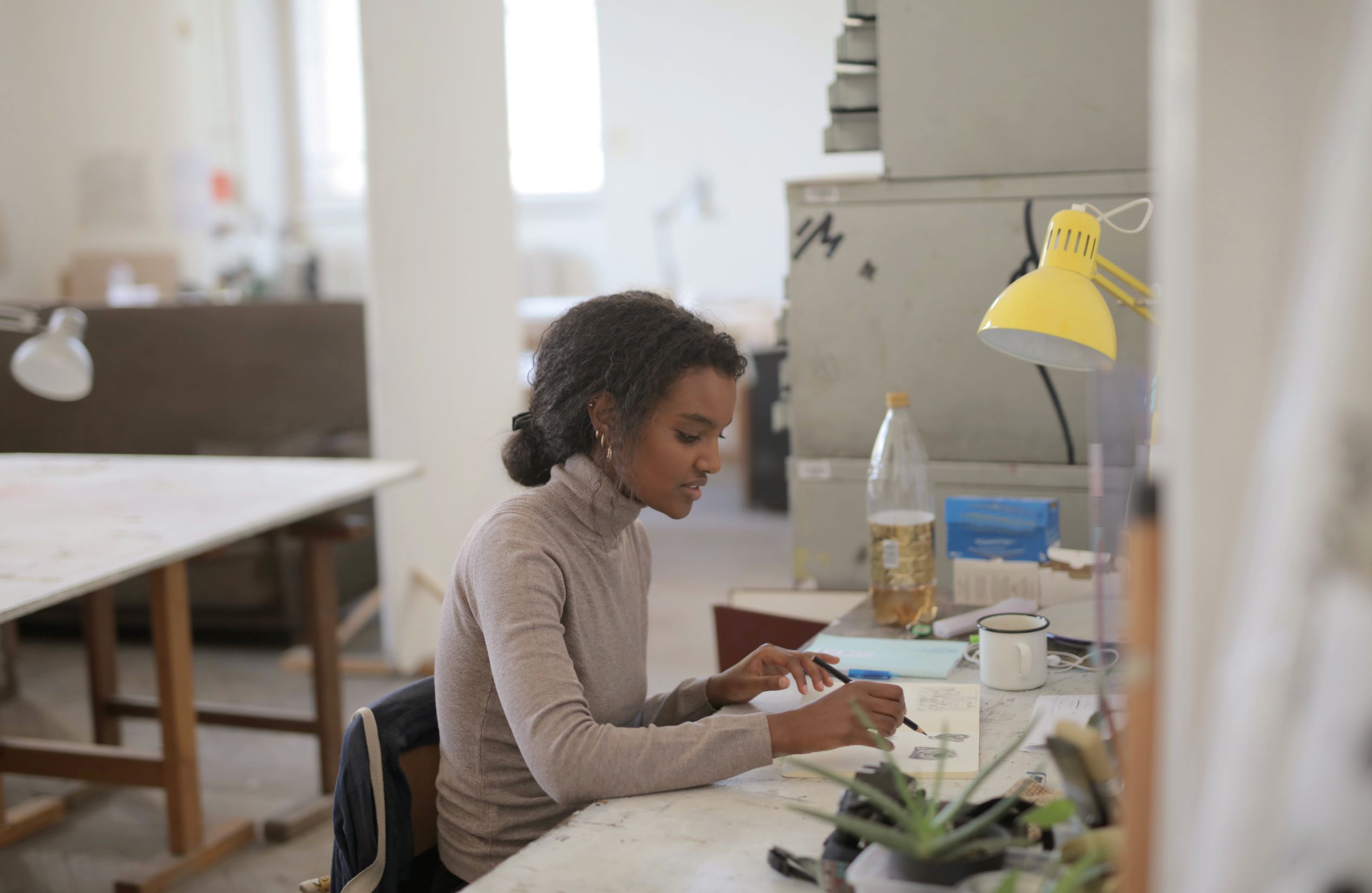
You have reached a point in your life where you want your things to be better or have better quality. And renovating is one of your options, but are not sure whether you want to hire an interior designer or not. Maybe you’ve heard so many good or bad things that you just aren’t sure anymore.
I’m pretty sure the interior design community will crucify me after this since I’ll be taking away some clients, but let’s be honest. The truth is it depends on the type of people you are and your interests. For some there is no better way than to hire an interior designer but for others, not quite, and in some cases don’t need it at all, so let’s start with why you Do need one.
Yes if:
You have Enough money to spend on. Let’s be honest, the design part has its cost and is not exactly cheap. Moving on with the construction and the selection of materials, interior designers give you the best materials in the market and discard all imitations and bad quality aka cheap stuff. It’s a good costume to ask a client how much will it be available to invest in the project so one can coordinate to a better result.
You want High quality results: if you’re expecting a very high-end designed space then you definitely need one. High quality materials and perfection in aesthetics is what we do. Interior designers are aware of the latest trends, great looking finishes so i wouldn’t hesitate on this one.
Want to brag and show everyone everything: Very similar to wanting High Quality results. Wanting to show off the masterpiece is another reason this design should be spotless with great quality of furniture, materials and fixtures because well, there will be a lot of judgy eyes on this, so it better be perfect.
Don’t have time to do it yourself: Not everyone has the time of a full time job and dedicate heart and soul of a thing you’re not familiar with. And even so, this will put you in a lot of stress if you are on your own, and sometimes it happens that you need to delay so many time-wasting activities like going to visit some hardware stores or to compare offers.
Don’t know a thing about decorating: Please hire an interior designer if this is your case. It will save you money, time, stress, sleepless nights, confusion over options, and so many more dealbreaker factors. The only way you could pull this off is if you have a friend who does and wants to help.
And don’t want to know. (about decorating) Well, if you are not interested in getting involved in the decor world, then you better not try a project on your own. It will be just a headache the entire time. It will be better for the long run to hire one, because interior designers are so passionate about the subject that once pulled off, you’ll see the charm in this and maybe Just Maybe, will want to try it on your own.
So now that we’ve established the reasons to hire an interior designer, let’s see the reasons why you shouldn’t.
Not exactly if:
Student or graduate, or artistic driven careers or hobbies: Having a project on your own is so exciting, more if you know about the subject and are genuinely interested in achieving that beautiful room with all that you’ve learned. I don’t guarantee that it will be perfect, but I know it will be yours and your achievement only. I encourage people to try this, because you learn so many things from this that there are cases where you end up falling in love with the art and want to dedicate yourself to it.
Don’t have enough money: Let’s be honest, even if you would want to hire one, not many are available for pro bonos or to make it really cheap. Instead, think of it as a learning project, try to protect your wallet as much as you can because in this case, it is normal to spend so much on an item, and leave the rest with no budget. Creating a budget is key in this scenario, so i’m going to leave a link of a previous video about budgets!
Don’t want anything state of the art result, just to look good and be satisfied with it: Definitely not a fancy person, instead, wanting your place to look more decent and pretty with your own taste. Hiring an interior designer may feel too expensive and not necessary, almost like overdoing.
Like challenges: Loving this energy. Take a referential picture of what you desire and start making it your own. Set yourself some goals, from budget to time of delivery. Hiring an interior designer feels like a waste of opportunity to learn something new so take advantage of that challenge thirst and start designing! Always check my video of Starting interior design if you don’t know where to start.
https://www.digistore24.com/redir/350912/TheDesigner101/
- Details
- Written by: Arch. Glenton
- Category: LATEST POSTS
- Hits: 1830


Yes you heard me. A big, rounded gold medal. It’s not exactly the Olympics but I have many reasons to believe that you and I are one of a kind and ready to roll in any obstacle in front of us. You achieve so much happiness from users and change their life perspective. I don’t know you but if you’re in this business it is very likely that you feel tired and exhausted, sometimes frustrated but thinking everything is worth the trouble.
For instance, we put up with whatever craziness your client wants, because of course there are so many types of clients that one project is so different from the other. Could be an eccentric one that only likes funky stuff in the room, or a very demanding one that you’re so close to terminating the whole project. Clients can be very difficult if your bad luck follows you everywhere, but that doesn’t stop you from declining an offer. You don’t give up.
The fact that you're handling a career so detailed oriented is trouble enough, not to mention the rest of the things you do. Motherhood, parenthood, supporting a family or sibling, working another job just to get you going, I can't even imagine a complex life of a person. Those high details follow you everywhere even when you're supposed to be resting or enjoying the day with someone. If you don't get the right idea it will hunt you down until you achieve it.
Not to mention the whole transformation of an entire space. This is what we all get praised about. And they are right! Being able to see what the room is capable of, realizing that all places deserve some attention and the capability to be transformed into something completely different means that you have vision, creativity and most important Passion. And to top it off, some spaces are the tiniest to just be there, but there you are, maximizing the sizes with every possible color, furniture or materials. You should give yourself more credit. I would.
I really need to mention all those emotions and reactions of your client at the end of the project. I know it sounds a bit cheesy but this is actually why people get into this business. It’s somehow a recharge of all the hard work and decisions you have been making that everything suddenly turns multi-colored and everyone is happy (besides all the downs). Being able to make a change in people’s lives and emotions gives you the power to make the difference. And we need that difference.
There are so many things among Interior design that are worth giving it credit, like managing a Budget. Generally for a small one, it’s sometimes complicated trying to stay between the limits but hoping not to look too cheap. Quite the contrary, you want it to look the most expensive, fashion and elegant ever possible. In some cases, we succeed, but in others we can’t help it but to extend the budget a bit. We even make dubious business with some suppliers just for keeping the price in the range, and of course it is a merit no one sees. Every project has its ups and downs, sometimes more of one than the other but every single one is a rollercoaster.
We need to give ourselves more credit than we usually get. As designers, we create beautiful spaces that can change people’s behavior for good. In a society where everyday is stress, anxiety, depression and so many more negative emotions, this kind of change is a necessity and we can do it. What better way to make the world a better place by giving the people what they need.
- Details
- Written by: Arch. Glenton
- Category: LATEST POSTS
- Hits: 2089

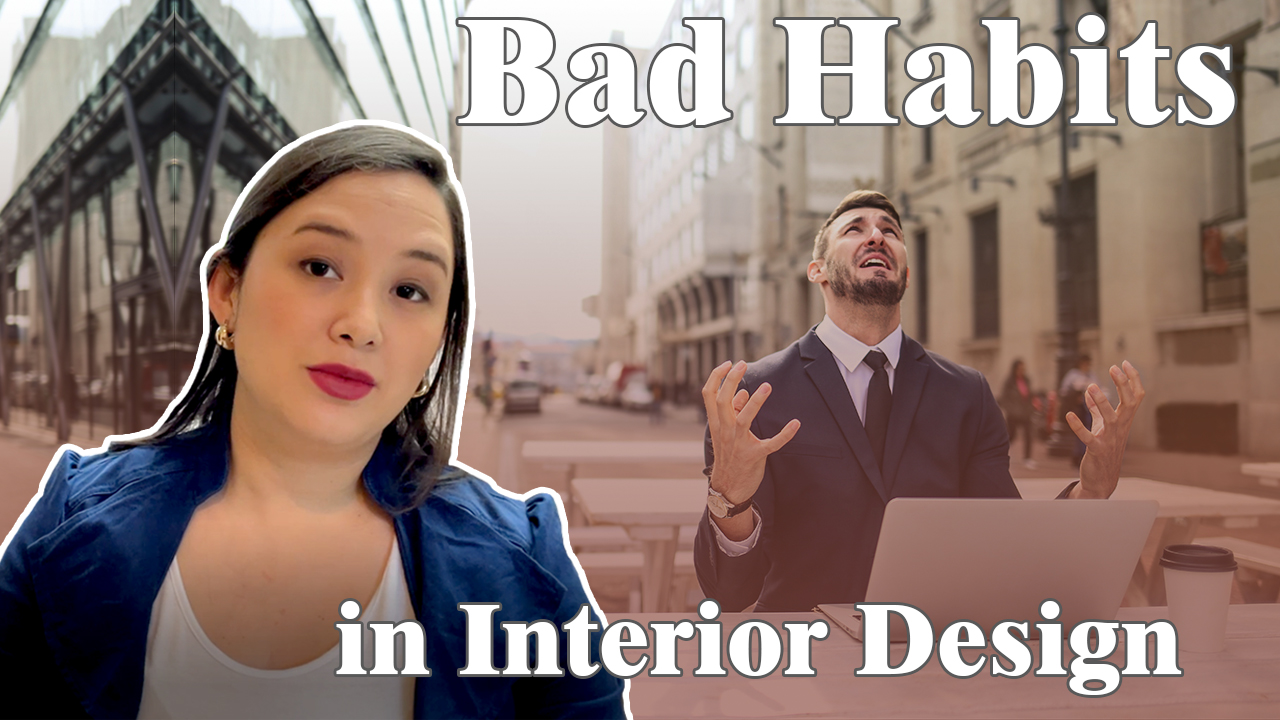
Creating your own space can be so exciting, but sometimes people misunderstand what interior design is. There are so many bad habits that people can make when designing a dream space for whatever reason: not studying enough in the room, not familiarized with the whole process, not familiarized with what's on the market and more.
Sometimes, Interior design, or the design in general gets a bad reputation because of the same thing. People trying to build something thinking it is as easy as choosing colors on a wall or just picking up a plant to give the room “life”. No wonder are people so unhappy with what they ended up with. This is a list that every designer should consider before getting into a project and avoid that disappointment.
Bad habit #1: Picking up colors or buying stuff.
This sometimes is either one or the other, which is the worst. I once had a client so frustrated because what he had done with the place didn't satisfy him (changing the entire color of the house), so he hired me. The fact that you dedicate some time to picking an exact vase or a couple of bed sheets doesn't make a design complete. Not even started. I'm sure you can pull something much more meaningful that a beige on the walls.
Bad habit #2: Don't consider textures and materials
Interior design is everything you see when you enter a home, office, store. It creates a sensation (hoping for a positive one), activates all your senses and in some cases, gets your mood so well that makes you study the room to see why you like it so much being there. This amount of feelings comes with the combination of everything, and literally everything that is in the room. From the specific plants selected, to the carpets, chandeliers, the texture of the furniture, the color of wood, even the size of the space. The exotic mirror you chose gives the place a sophisticated look along with the candles that you put on the table. Everything is everything.
Bad habit #3: Design without a Concept.
The fact that you liked a striped rug, and a minimalism lamp, and a very bright green, doesn't mean you have to put everything together in the same project. I highly recommend thinking and planning before locating and constructing. Designing without concept is like going to the market and buying everything you're interested in. The difference is that you're not gonna eat everything at once. Please have a Concept that will guide you till the whole process, along with a mood board to keep you between the colors that combine and style of furniture you want.
Bad habit #4: Change your design constantly. Worst during construction.
I get there is a -try this instead of that- part of the process. I'm one perfectionist kind of designer too. I'm talking about once you have finished and ready to get all the materials ready, but suddenly you saw a photo that you really liked and it is the end of the world. This can happen even when constructing! This bad habit definitely is the most expensive one, since some stores don't have return policies. Love your work and don't proceed until you're absolutely in love with it.
Bad habit #5: Planning without budget.
Yes, another expensive one. This is a bad habit if you don't have enough money, cause if this isn't your case please don't even read it. This is more common during projects where you want to change almost everything. And building new furniture or getting everything new is pretty money demanding.
Bad habit #6: Planning without standard measurements
I'm totally guilty here. Happens most of the time in modeling softwares that you just draw as it looks better, doesn't matter if it is 10 inches larger or shorter, it just looks better that way, so you end up with a custom made article (or several), and of course, there's no store that offers the product so you end up either changing the shape, or with a very high bill. This can be a problem later with your client because clients expect exactly what you offer, and this may force you to go with the out of the budget bill.
Bad habit #7: Ctrl+C, Ctrl+V.
Very bad habit and very common. The Copy & Paste method is one of a kind, ironically. Having referential images is one thing, but copying the whole project is another. The referential images are very important FOR YOU. They help you untangle your ideas and you’ll get an idea of what would go best for a specific project. I’m sure you and I can come up with a very high quality design picking up a few things for one image, and a few things from another, plus your own ideas.
Bad habit #8: Thinking of unavailable products
It is common when you’re downloading a few models for lamps, sofas, chairs or even plant pots for your final renderings. People are very creative when designing all kinds of features, and you just love how it looks in the project, except this is not available in your country, and bringing it could cost more time than money. Knowing what your country offers is key, because all projects are expected to begin almost immediately after the clients agree on a design. Of course there are exceptions to the rule, and in bigger projects there are clients that have quality control and set standards on the materials or furniture so it is a Must to bring everything.
Having bad habits it’s part of the process too. The key is to identify it (hopefully on time) to become the best version of yourselves and achieve some of the most wonderful designs you can think of. Don’t worry if you make a few of these, after all, we’re constantly learning from our experiences. Practice makes perfect.
- Details
- Written by: Arch. Glenton
- Category: LATEST POSTS
- Hits: 1839
